
The Challenges

Challenges

Every Enterprise company has business applications hosted on servers that are running in some form of cloud service:

Public Cloud

AWS, Azure, Google, Alibaba, etc.

On Premises

In their own DataCentre or a 3rd party Datacentre.

Managed

Managed by internal Cloud & Operations teams or managed by a 3rd party.

So how do you…

Control and track the thousands of assets that are typically spread across public and on-premise cloud.

Monitor and ensure the assets are running properly?
Resolve incidents more quickly, etc?
Control costs, compliance, governance?
Control how and in which cloud service new applications should be deployed?
Manage and monitor security anomalies, vulnerability assessments, etc?

Why does it matter?

Because not tracking cloud assets effectively is costing you $m / per annum.

Here’s two examples:

Example #1

Wasted Cloud Spend
Wasted spend in cloud services is estimated at 27-35% of annual spend.

38% of Enterprise companies spend over $2.4m / per annum.

13% spend over $12m/annum.

Wasted spend is between $720k – $3.6m/annum
Example #2

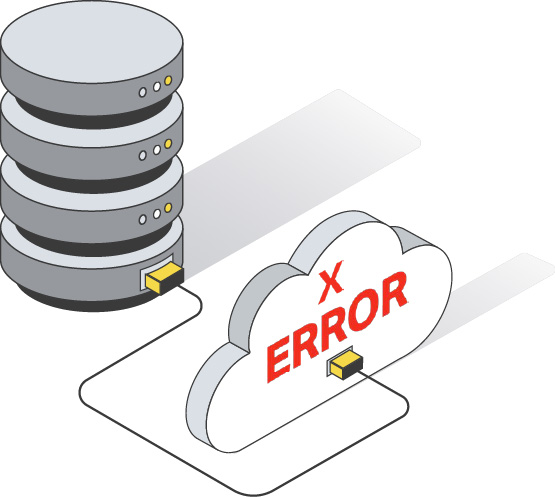
Cost to a business of critical incidents
It is estimated that the average cost of application down time is $11,000/min which equates to $660,000/hr.

On average it takes 1 hour just to assemble the correct team of people before investigating a critical/major incident and you will experience 5/6 critical incidents per year.

Cost of critical incidents $3.96m – $7.92m/annum

Your checklist for mastering hybrid cloud…

Evaluate the areas in which the Public Cloud can provide genuine assistance

It has been observed that the Public Cloud can serve as a supportive strategy for application delivery, rather than the sole approach. However, without adequate supervision or planning, its implementation can contribute to further complications in IT provisioning and management, which necessitates skillful handling. Thus, it is advisable to have a thorough understanding of the requirements before adopting it, rather than jumping the gun and learning on the job.

Incorporate Automation and Orchestration

If you are currently experiencing difficulties in delivering new applications or managing existing ones on-premises, shifting to the cloud without altering your approach is unlikely to significantly improve your situation. In fact, it may create a fresh set of challenges. Therefore, consider implementing automation and orchestration as a means to streamline your processes and enhance your efficiency.

Allocate Resources to Integrated Management

A majority of enterprises depend heavily on the default tools provided with their applications or cloud services. While these tools may be effective for in-depth management, it can be challenging to discern the bigger picture. Therefore, it is recommended to invest in integrated management solutions that provide a comprehensive overview of your entire infrastructure and facilitate better decision-making.

Proactively Detect and Resolve Issues

Having a unified and current perspective on the performance and expenditure of your application portfolio is crucial to detecting potential issues early on and curbing expenses before they escalate. This ability is considered the holy grail of effective management, enabling enterprises to maintain control and prevent issues from spiraling out of hand.

Regulate Your Expenses

Leading digital organizations prioritize the utilization of advanced automation and orchestration, along with intelligent assisted operations, to increase their agility and flexibility. Simultaneously, they actively manage their performance and expenses to maintain a comprehensive perspective on their operations.

Volatile market conditions are forcing rapid responses

Key Business Areas of Focus

  • Development of software.
  • Ensuring business resilience.
  • Enhancing collaboration among employees,
    operations, and partners.
Primary IT Strategic Priorities

  • Expediting the adoption of cloud technology.
  • Facilitating remote work.
  • Strengthening resilience and risk management.
  • Implementing real-time automation.

    Having a strong digital leadership significantly impacts revenue generation

    Companies that fall into the category of Digital Leaders, which refers to the top 25% of organisations making substantial investments in advanced IT infrastructure technologies, experienced notable revenue growth.

    This advantage enables them to capture a larger share of existing markets or easily transition into new ones.

    See how we help